
Skip to content
Needmug

A studio that answers for the work it puts its name to.

Needmug Digital has worked out of London and Istanbul since June 2019. Most of that time went into fintech, where a mistake turns up on somebody’s statement. The people you brief are the people who design it, build it and argue with you about it.

How the studio runs.

Four things that have not changed since 2019.

  1. Senior people, start to finish.The same people across two cities, from the first call to the last release. Nobody hands your project down to someone cheaper once the contract is signed.
  2. Launch is not the end of it.The people who built it are the people you call when something breaks. Support runs with the same team, on the same contract.
  3. Design and engineering sit together.The people drawing the interface are the people building it, so what gets designed is something that can actually ship.
  4. We say when something is a bad idea.Including when the honest answer means a smaller project for us, or none at all. It has cost us work. It has also kept clients for years.

What the work involves.

Four parts of a project we keep in the studio rather than hand to anyone else.

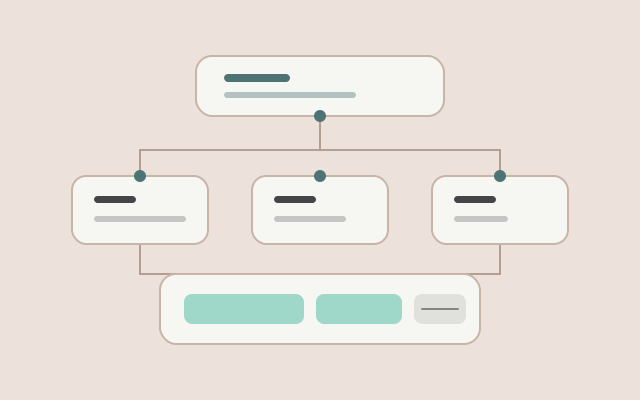
  • A product goal at the top, three open questions beneath it, and a scope narrowed to two items with a third struck out

    First we argue about what to build.

    Before any design or code, we establish what the product has to do, who for, and what it would cost to get wrong. That often means arguing you out of half the scope you arrived with.
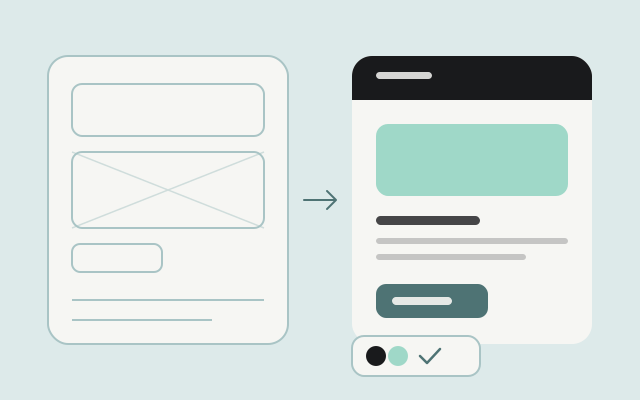
  • A wireframe on the left resolving into a finished interface on the right, with a colour contrast check beside it

    Then someone draws it.

    Flows and wireframes first, then interface design, tested with people who match your users. Accessibility gets checked while it is still cheap to change.
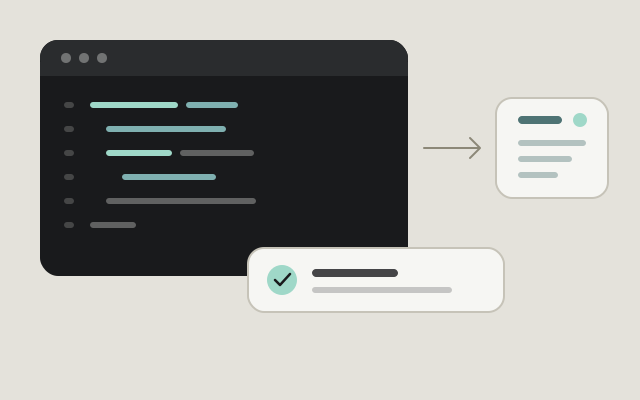
  • An editor window of code, an approved review beneath it, and an arrow out to a running deployment

    The person who drew it builds it.

    Nothing gets handed to a delivery team who never sat in the discovery sessions and has to guess what you meant. That handover is where most projects quietly lose their detail.
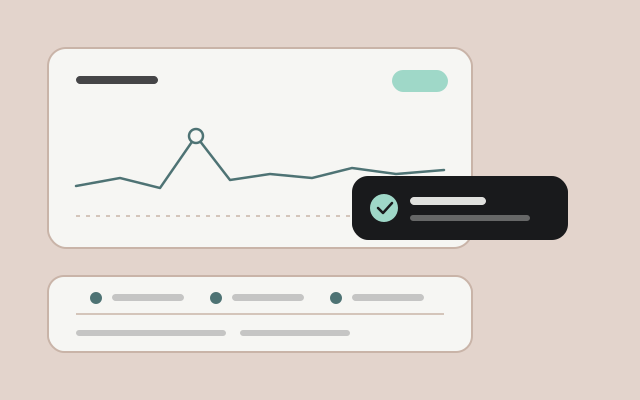
  • A monitoring chart holding steady after one spike, an alert marked resolved, and a list of releases beneath it

    We are still here in year two.

    Monitoring, support and the changes that come after. Handover is a date in the project, not the end of the arrangement.

Find out in one call.

One call is usually enough to work out whether this is the right studio for it. If it is not, we will say so and point you somewhere better.